






If you have experienced sexual harassment and need support, please see our list of resources here.
What is Safer Spaces?
Safer Spaces is an initiative developed by go2HR with support from Justice Canada to raise awareness about and help prevent sexual harassment in tourism and hospitality workplaces. The following principles lead our work:
- Promoting diversity, inclusion, sensitivity and respect
- Applying a survivor-centered and trauma-informed lens
- Avoiding duplication of efforts by promoting the work of others
- Ensuring materials are accessible to the industry at large
What’s New in Safer Spaces?
- New Workplace Investigations training
- Training now available in multiple languages
- Updated content for vulnerable workers

Legal Requirements for Employers
Implementing a comprehensive Sexual Harassment Prevention Program is a legal obligation for employers. It is also a critical investment in workplace culture, employee safety, and organizational reputation.
Employers in Canada are required to provide safe workplaces. Without a defined Sexual Harassment or Workplace Violence Prevention Program, you increase legal liability if an incident occurs.
Sexual harassment and workplace violence fall under multiple legislative frameworks. Select a category below to understand your responsibilities.
Our Employer Advisory Services
go2HR offers free advisory services that support Tourism and Hospitality employers in BC with operationalizing a Sexual Harassment Prevention Program in their business. Our Advisory services, which include 1:1 consulting, offer:
- Auditing existing programs
- A roadmap to implement a program
- Resources that can be customized to your sector and business
- A step-by-step guide from initial risk assessment to investigation and reporting
If you need assistance with assessing or implementing a Sexual Harassment Prevention Program, contact saferspaces@go2hr.ca to get started today.
We recognize that sexual harassment may be part of a broader spectrum of behaviors that make up workplace violence. If you would like to implement a comprehensive Workplace Violence Prevention Program that includes sexual harassment, please indicate this in your email.

Employer Roadmap
The Employer Roadmap breaks down the operationalization of a Sexual Harassment Prevention Program into three structured steps. These steps are outlined in the recommended order of completion to successfully launch your program.
Risk Assessment
A risk assessment is essential to determine actual and potential risks in the workplace, contributing factors, likelihood of occurrence, and severity of harm that may result.
Policy Development
Policy development includes identifying responsibilities within the workplace and developing a comprehensive policy, either specific to sexual harassment or a broader workplace violence policy supported by procedures.
Implementation
Successful program launch includes advising leadership and employees, training all staff, and conducting annual reviews and reporting if required.
Why should you care ?

One in ten women experience gender-based discrimination at work

Inappropriate sexualized behaviour more common for women in occupations historically held by men

Many women do not speak out about their experiences for fear of negative impact on their career

Women and men in service jobs experience high rates of inappropriate sexualized behaviours

One in three women targeted with sexually explicit materials at work says someone in authority was responsible
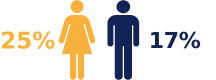
In 2020, 25% of women and 17% of men experienced sexual misconduct in their workplace

Over 25% of employees did not feel like their employer had given them information on identifying, reporting, or accessing resources related to sexual harassment
Source: Status Canada https://www.statcan.gc.ca/en/start
Safer Spaces Training

Our Sexual Harassment
Course for Leaders
Safer Spaces for Employers and Supervisors is the first in a series of two Safer Spaces online courses that have been developed by go2HR. Leaders are fundamental to creating sexual harassment free workplaces because they establish the safety culture and set the tone. We invite B.C.’s employers and supervisors to take the lead by completing the Safer Spaces course and creating their own safer workplaces.

Online Sexual Harassment
Course for Workers
Sexual harassment is a pervasive problem in the tourism industry, affecting employees and guests alike. We’re proud to offer a comprehensive sexual harassment training course designed for the tourism industry.
Investing in sexual harassment training for your tourism industry employees is not only the right thing to do but also makes good business sense. Creating a safe and respectful workplace can attract and retain top talent, increase employee morale and productivity, and improve guest satisfaction.
Get Involved & Access Support
Safer Spaces hopes to challenge and change our industry by providing easy access to resources and training on the topic of sexual harassment. In doing so, we aim to raise awareness about the topic and also equip BC’s tourism and hospitality workforce with practical knowledge and tools to help prevent it.
How to get involved


What to do if You Need Help!
If you have experienced sexual harassment and need some support, please access the following resources:
 Crisis Text Line
Crisis Services Canada
Salal Sexual Violence Support Centre
Hope for Wellness Counseling Services
Battered Women’s Support Services
BC Society for Male Survivors of Sexual Abuse
If you are in immediate danger or fear for your safety,
Crisis Text Line
Crisis Services Canada
Salal Sexual Violence Support Centre
Hope for Wellness Counseling Services
Battered Women’s Support Services
BC Society for Male Survivors of Sexual Abuse
If you are in immediate danger or fear for your safety,please call 911